MOTORCYCLE SECTION 2: THE RIDER AND THE MOTORCYCLE
Motorcycling is a unique experience.
Compared to a car, you don’t sit in a motorcycle; you become its upper half. Not as a passive driver, but as an active rider leaning into a string of smooth corners, playing along with the rhythm of the road; shifting, accelerating, and braking with precision. Whether you ride to and from work or prefer the camaraderie of a group ride on the weekend, motorcycling engages all your senses and creates an exhilarating sense of freedom.
Along with that freedom comes responsibility. All states require some form of license or endorsement to demonstrate that you possess a minimum level of skill and knowledge. This booklet and other motorcycle publications can help prepare you to be successful. You might also consider taking a formal hands-on training course, even if your state doesn’t require that you complete one. You’ll learn how to improve your riding skills and mental strategies, so you can be a safer, more alert rider and enjoy riding that much more.
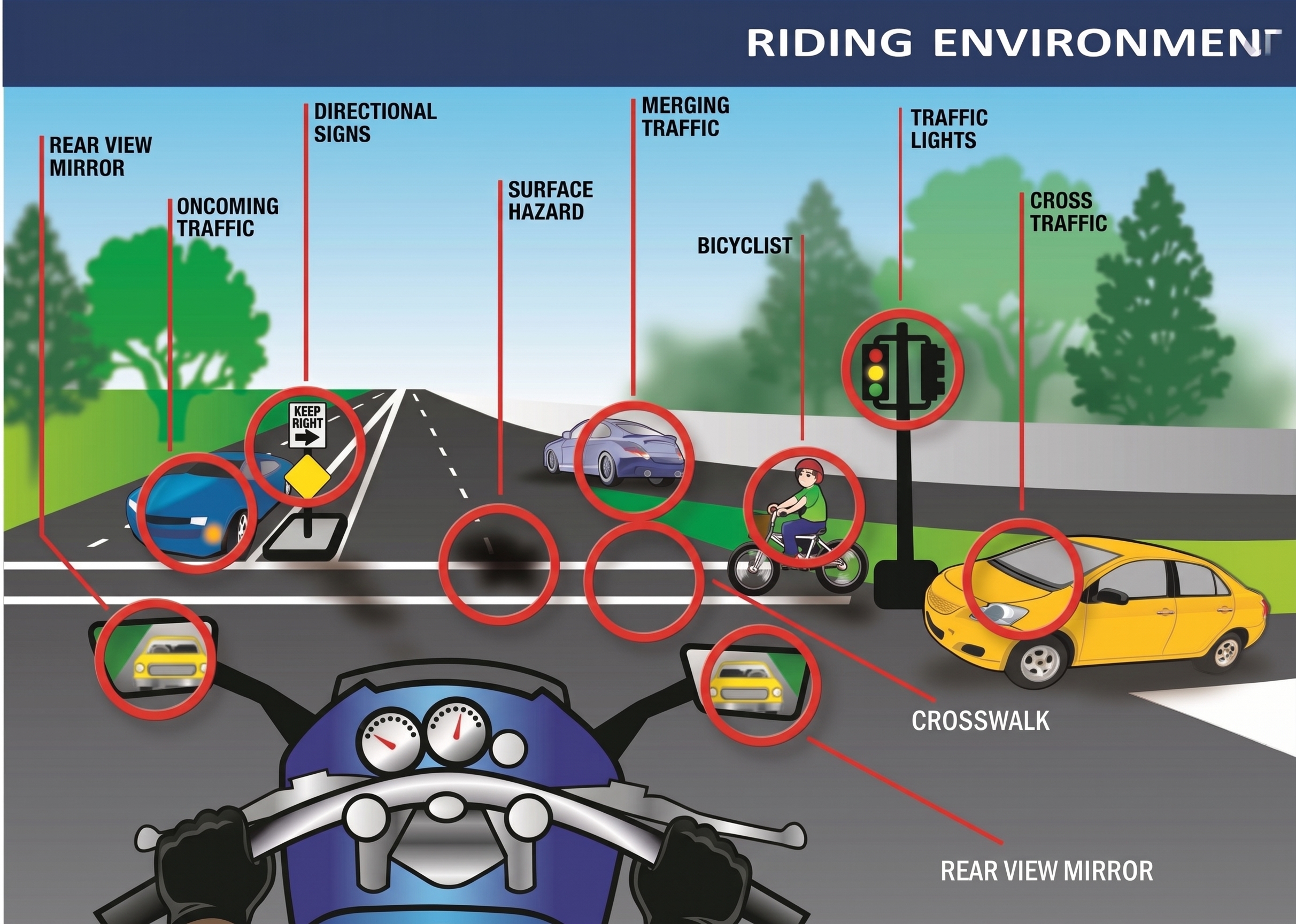
The diagram above illustrates the complex environment that awaits you, and supports the concept that, as the Motorcycle Safety Foundation says, “Safe riding depends as much on the mental skills of awareness and judgment as it does on the physical skill of maneuvering the machine.”
Successfully operating a motorcycle is a much more involved task than driving a car. Motorcycling requires strength, coordination, and balance, as well as a heightened sense of awareness and position amidst other roadway users. A motorcycle is more responsive than a car, but is also more sensitive to outside forces, like irregular road surfaces or crosswinds. A motorcycle is also less visible than a car due to its narrower profile and offers far less protection by exposing its rider to other traffic and the elements. All these risks can be managed through training and education.