MOTORCYCLE SECTION 5: BEING IN SHAPE TO RIDE
Riding a motorcycle is a demanding and complex task. Skilled riders pay attention to the riding environment and to operating the motorcycle, identifying potential hazards, making good judgments, and executing decisions quickly and skillfully. Your ability to perform and respond to changing roadway and traffic conditions is influenced by your fitness and alertness. Alcohol and drugs, more than any other factor, degrade your ability to think clearly and to ride skillfully. As little as one drink can significantly affect performance.
Let’s look at the risks involved in riding after drinking or using drugs. What to do to protect yourself and your fellow riders is also examined.
Why this Information is Important
Alcohol is a major contributor to motorcycle crashes, particularly fatal crashes. Studies show that nearly a third of all fatally injured motorcycle riders had BAC levels above the legal limit of 0.08%. An additional 8% had lower alcohol levels (BAC 0.01 to 0.07%), demonstrating that having only a drink or two in one’s system is enough to impair riding skills. Drug involvement is harder to distinguish and may have been separated from drinking violations for the traffic records. But riding “under the influence” of either alcohol or drugs poses physical hazards and legal consequences for every rider.
Drinking and drug use are as big a problem among motorcyclists as they are among automobile drivers. Motorcyclists, however, are more likely to be killed or severely injured in a crash. Injuries occur in 90% of motorcycle crashes and 33% of automobile crashes that involve abuse of substances.
By becoming knowledgeable about the effects of alcohol and drugs, you will see that riding and impairment don’t mix. Take positive steps to protect yourself and prevent others from harming themselves.
Alcohol and Drugs in Motorcycle Operation
No one is immune to the effects of alcohol or drugs. Friends may brag about their ability to hold their liquor or perform better on drugs, but alcohol or drugs make them less able to think clearly and perform physical tasks skillfully. Judgment and the decision-making processes needed for vehicle operation are affected long before legal limits are reached.
Many over-the-counter, prescription, and illegal drugs have side effects that increase the risk of riding. It is difficult to accurately measure the involvement of particular drugs in motorcycle crashes. But we do know what the effects of various drugs have on the processes involved in riding a motorcycle. We also know that the combined effects of alcohol and drugs are more dangerous than either is alone.
Alcohol in the Body
Alcohol enters the bloodstream quickly. Unlike most foods and beverages, it does not need to be digested. Within minutes of consumption, it reaches the brain and begins to affect the drinker. The major effect alcohol has is to slow down and impair bodily functions — both mental and physical. Whatever activity you do, you do less well after consuming alcohol.
BLOOD ALCOHOL CONCENTRATION
Blood Alcohol Concentration, or BAC, is the amount of alcohol in relation to blood in the body. Generally, alcohol can be eliminated in the body at the rate of almost one drink per hour. But a variety of factors may also influence the level of alcohol retained. The more alcohol in your blood, the greater the degree of impairment.
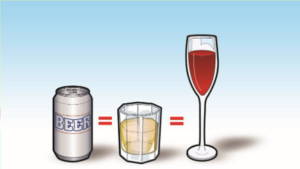
Three primary factors play a major part in determining BAC:
- The amount of alcohol you consume.
- How fast you drink.
- Your body weight.
Other factors also contribute to the way alcohol affects your system.
Your sex, physical condition, and food intake are just a few factors that may cause your BAC level to be even higher. But the full effects of these are not fully known. Alcohol may still accumulate in your body even if you are drinking at a rate of one drink per hour, especially for women.
Abilities and judgment can be affected by that one drink.
A 12-ounce can of beer, a mixed drink with one shot (1.5 ounces) of hard liquor, and a 5-ounce glass of wine all contain the same amount of alcohol.
The faster you drink, the more alcohol accumulates in your body. If you drink two drinks in an hour, at the end of that hour, at least one drink will remain in your bloodstream.
Without taking into account any other factors, these examples illustrate why time is a critical factor when a rider decides to drink.
If you drink:
- Seven drinks over the span of three hours, you would have at least four (7 – 3 = 4) drinks remaining in your system at the end of the three hours. You would need at least another four hours to eliminate the alcohol from the four remaining drinks before you consider riding.
- Four drinks over the span of two hours, you would have at least two (4 – 2 = 2) drinks remaining in your system at the end of the two hours. You would need at least another two hours to eliminate the alcohol from the two remaining drinks before you consider riding.
Alcohol and the Law
In all but one state, an adult with a BAC of 0.08% or above is considered intoxicated (in Utah, the threshold is 0.05%.) For operators under the age of 21, lower BAC limits (0.00 to 0.02%, depending on state) apply. It doesn’t matter how sober you may look or act. A breath, blood, or urine test is what usually determines whether you are riding legally or illegally.
Whether or not you are legally intoxicated is not the real issue. Impairment of judgment and skills begins well below the legal limit.
CONSEQUENCES OF CONVICTION
Years ago, first offenders had a good chance of getting off with a small fine and participation in alcohol-abuse classes. Today, the laws of most states impose stiff penalties on drinking operators. And those penalties are mandatory, meaning that judges must impose them.
If you are convicted of riding under the influence of alcohol or drugs, you may receive any of the following penalties:
- License suspension — Mandatory suspension for conviction, arrest, or refusal to submit to a breath test.
- Fines — Severe fines are another aspect of a conviction, usually levied with a license suspension.
- Insurance rate increase — A DUI/ DWI conviction can put you into a “high risk” category. So, having a DUI on your driving record means you’ll be paying for it long after your court or legal interactions have ended.
- Community service — Performing tasks such as picking up litter along the highway, washing cars in the motor-vehicle pool, or working at an emergency ward.
- Costs — Additional lawyer’s fees, lost work time spent in court or alcohol- education programs, public transportation costs (while your license is suspended), and the added psychological costs of being known as a “drunk driver.”
Minimize the Risks
Your ability to judge how well you are riding is affected first. Although you may be performing worse and worse, you think you are doing better and better. The result is that you ride confidently, taking greater and greater risks. Minimize the risks of drinking and riding by taking steps before you drink or choose to totally separate the two. Separate your drinking from your riding.
MAKE AN INTELLIGENT CHOICE
- Don’t drink — Once you start, your resistance is weaker.
Setting a limit or pacing yourself are poor alternatives at best. Your ability to use good judgment is one of the first things affected by alcohol. Even if you have tried to drink in moderation, you may not realize to what extent your skills have suffered from alcohol’s impairing effects. - Or don’t ride — If you haven’t controlled your drinking, you must avoid riding.
- Leave the motorcycle — so you won’t be tempted to ride. Arrange another way to get home.
- Wait — If you exceed your limit, wait until your system eliminates the alcohol and its fatiguing after-effects.
Step in to Protect a Friend
People who have had too much to drink are unable to make a responsible decision. It is up to others to step in and keep them from taking too great a risk. No one likes doing this — it’s uncomfortable and embarrassing. And you are rarely thanked for your efforts at the time. But the alternatives are often worse.
There are several ways to keep friends from hurting themselves:
- Arrange a safe ride — Provide alternative ways for them to get home.
- Slow the pace of drinking — Involve them in other activities.
- Keep them there — Use any excuse to keep them from getting on their motorcycle. Serve them food and coffee to pass the time. Explain your concerns about their risk of arrest, injury, or hurting others. Take their key, if you can, and secure their bike.
- Get friends involved — Use peer pressure from a group of friends to intervene.
Cannabis and Motorcycle Operation
Cannabis (Marijuana) is gaining acceptance as having legitimate medicinal applications and as a recreational drug in the United States, as evidenced by recent trends in state laws permitting its use. More than half the states allow cannabis for medical use, and some allow it for recreational use by people 21 and over.
Although cannabis may be legal for medicinal or recreational use in your state, it is still not legal, safe, or wise to operate a motor vehicle while impaired by cannabis, since it tends to distort your perception of time, space, and speed. This is especially critical for motorcycle riders, who must continually assess complex traffic situations and make split-second decisions that require precise rider input to navigate safely and maintain an adequate safety margin.
When cannabis is smoked, its effects generally begin within a few minutes and can last from 2 to 4 hours. But when cannabis is eaten, the onset of effects could be delayed for more than an hour, and the duration of the “high” could be more than six hours.
Be safe. Do not operate your motorcycle or any motor vehicle if you are impaired by cannabis, and find alternate transportation if you are planning to be under the influence of cannabis at your destination. Just as with alcohol, riders impaired by cannabis can be convicted of riding under the influence and be subjected to similar harsh penalties.
Fatigue
Riding a motorcycle is more tiring than driving a car. On a long trip, you’ll tire sooner than you would in a car. Avoid riding when tired. Fatigue can affect your control of the motorcycle.
- Protect yourself from the elements — Wind, cold, and rain make you tire quickly. Dress warmly. A windshield is worth its cost if you plan to ride long distances.
- Limit your distance — Experienced riders seldom try to ride more than about six hours a day.
- Take frequent rest breaks — Stop and get off the motorcycle at least every two hours.
- Don’t drink or use drugs — Artificial stimulants often result in extreme fatigue or depression when they wear off. Riders are unable to concentrate on the task at hand.
TEST YOUR KNOWLEDGE
- If you wait one hour per drink for the alcohol to be eliminated from your body before riding.
- You cannot be arrested for drinking and riding.
- Your riding skills will not be affected.
- Side effects from the drinking may still remain.
- You will be okay as long as you ride slowly.
Test answers: (1) 3