MOTORCYCLE SECTION 1: MOTORCYCLING IN UTAH
What is a Motorcycle?

A motorcycle is a motor vehicle, other than a tractor, having a seat or saddle for the use of the rider and designed to travel with not more than three wheels in contact with the ground. Utah Traffic Code 41-6a-102 (35). A driver license and a motorcycle endorsement are required to ride a motorcycle on public roads and lands.
NOTE: The motorcycle endorsement may have a restriction depending on the size of the motorcycle the rider is tested on.
Motorcycling is a very popular form of recreation and transportation for thousands of residents throughout the Beehive State. Riding is fun, exciting, and challenging, but it has its risks because riders are exposed and vulnerable. The greatest challenge you face when riding is avoiding accidents and injuries.
The basic content of this motorcycle operator manual has been developed and provided by the Motorcycle Safety Foundation and covers general motorcycle operations. This section contains information pertaining specifically to motorcycling in the State of Utah, and is only a part of what every good motorcycle rider should know. This section condenses or paraphrases the actual language of the Utah Traffic Code. We hope this information will help you enjoy riding and meet the challenges every rider faces on our streets and highways.
REQUIRED EQUIPMENT
Every motorcycle and every other type of bicycle with motors, etc., shall be equipped with the following items:
- One head lamp;
- One tail lamp;
- Either a tail lamp or a separate lamp to illuminate the rear license plate with a white light;
- One red reflector on the rear;
- One-stop lamp;
- A braking system;
- A horn or warning device;
- A muffler and emission control system that complies with Utah requirements;
- A mirror;
- Depth of tire tread no less than 2/32 inch;
- Foot rests for any passenger;
- Handlebars not higher than shoulder height; and
- All motorcycles manufactured after January 1, 1973, must be equipped with turn signals.
It is unlawful for a person to operate a motor vehicle upon Utah highways unless the vehicle is in safe and good mechanical condition and all required equipment is in good working order.
PROTECTIVE HEADGEAR (HELMETS)
Everyone is encouraged to always wear an approved helmet when riding a motorcycle. It is against the law for anyone under the age of 21 to operate or ride a motorcycle, or any type of electric-assisted bicycle, motor-assisted scooter, high-power electric device, or an autocycle that is not fully enclosed upon a public street or highway, unless he/she is wearing protective headgear that complies with federal DOT standards.
NOTE: A court shall waive $8 of a fine charged to a person operating a motorcycle or for a moving traffic violation if the person was 21 years of age or older at the time of operation and wearing a protective headgear that complies with federally approved DOT standards.
SAFETY INSPECTIONS
Safety inspections are no longer required for most vehicles, including all motorcycles. However, first-time, street-legal ATV registration does require a safety inspection. For further information, contact the Utah Department of Motor Vehicles.
REGISTRATION
Unless exempted, a person may not operate a motorcycle in Utah unless it has been registered in accordance with Utah statutes. Utah registration is required for any motor vehicle within 60 days of the owner establishing residency in this state.
Residency in Utah is established when an individual has a domicile in the state, remains in the state for a period of six months or more during any calendar year, engages in a trade, profession, or occupation in the state, or accepts employment in other-than-seasonal work, and does not commute into the state.
INSURANCE
You may be required to provide, in writing, or present other reasonable evidence, that you (not the bank, loan company, or lien holder) have owner’s insurance (or similar security) in effect at the time of registering, or obtaining license plates for your motorcycle. The law also states that any person operating a motorcycle shall have in his/her immediate possession evidence of insurance for that vehicle. Failure to provide proof of insurance when requested by a peace officer can result in the surrender of your driver license. Any additional violations of this law may result in the surrender of your vehicle's registration.
LICENSE
“License” means the privilege to drive a motor vehicle. “License certificate” (usually referred to as a driver license) means the evidence of the privilege issued to drive a motor vehicle. Utah law requires that everyone operating a motorcycle on Utah public roads and highways must have in his/her possession a valid driver license with an endorsement for operating motorcycles. A temporary learner permit can be issued if the applicant is at least 16 years old, has a valid Class D or Commercial Driver License, and has passed the vision test and the required motorcycle written knowledge test. To obtain a learner permit, you must go to a Driver License office, complete the application process, and pay the fee. A learner permit is valid for six months.
For the first two months from the date a motorcycle learner permit is issued, the operator of a motorcycle who holds a motorcycle learner permit may not:
- Operate a motorcycle on a highway with a posted speed of 60 miles per hour or more;
- Carry passengers; and
- Ride between the hours of 10 P.M. and 6 A.M.
After holding a motorcycle learner permit for two months, the learner permit holder may operate a motorcycle without the aforementioned restrictions imposed.
NOTE: Anyone younger than 19 years old must hold the motorcycle learner permit for two months. The two-month requirement may be waived upon proof of completion of the Basic RiderCourse (BRC). See Utah Rider Training Program for more information.
TIERED LICENSING
Motorcycle endorsements are issued based on a tiered system. The restriction will be determined by the size of the motorcycle used during the motorcycle skills test.
- If you test on a motorcycle 90 cc or less, you will be restricted to riding motorcycles 90 cc or less*
- If you test on a motorcycle 249 cc or less, you will be restricted to riding motorcycles 249 cc or less*
- If you test on a motorcycle 649 cc or less, you will be restricted to riding motorcycles 649 cc or less*
- If you test on a motorcycle 650 cc or larger, you will not be restricted.*
*Also applies to three-wheelers.
MOTORCYCLE RIDER SKILLS TEST
You must provide your own registered motorcycle for the skills test at the Driver License office. The following diagrams represent the four parts of the motorcycle skills test. Applicant must successfully complete all parts to obtain a motorcycle endorsement.
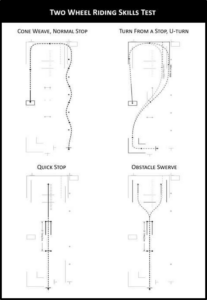
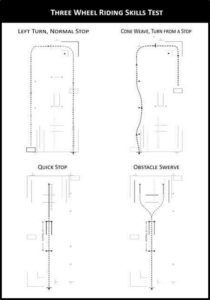
NOTE: Due to space availability at certain Driver License offices, the test may be adjusted in some areas. Motorcycle skills tests are given by appointment only in most offices. If you test on a three-wheeled motorcycle, you will be restricted to riding only three-wheeled motorcycles.
TRAFFIC RULES AND REGULATIONS
All operators of any motor vehicle, including motorcycles, must comply with the same traffic rules and regulations. Some items that may be of specific interest to you are listed below for your information. (All of the items pertain to motorcycles.)
- When operating a motorcycle, you must have in your immediate possession a valid driver license that authorizes the operation of a motorcycle.
- When operating a motorcycle, you must have proof of financial responsibility (insurance) in your immediate possession.
- Motorcycles are permitted to use High Occupancy Vehicle (HOV) Lanes.
- A person operating a motor vehicle in Utah is considered to have given his/her consent to a chemical test or tests for the purpose of determining whether he/she was operating the vehicle under the influence of alcohol, any drug, or a combination of alcohol and any drug. Failure to comply with a peace officer's request to take a test or tests will result in the revocation of driving privileges.
- You must signal your intention to turn right or left, or to change lanes, for at least TWO seconds before beginning the turn or lane change.
- Upon the approach of an authorized emergency vehicle using audible (sirens) and/or visual signals (flashing lights, etc.), you must yield the right-of-way, and immediately move to the right-hand edge or curb of the road or highway and stop. You are to remain stopped until the emergency vehicle has passed.
- You cannot carry another person on a motorcycle unless it has been designed to carry more than one person. The passenger must ride upon the permanent and regular seat, if designed for two persons, or upon another approved seat firmly attached to the motorcycle. The additional seat must not degrade or interfere with the safe control of the motorcycle. The motorcycle must also be equipped with passenger footrests.
- It is unlawful to operate a motorcycle while carrying a package, bundle, or other article that prevents you from keeping both hands on the handlebars.
- All motorcycles are entitled to full use of a lane.
- Generally, it is unlawful to ride a motorcycle between lanes of traffic or rows of vehicles, unless certain conditions have been met (see Lane Filtering below.)
- Motorcycles may not be operated more than two abreast in a single lane.
- It is unlawful to throw any lighted material from a moving vehicle.
- Every vehicle shall be equipped, maintained, and operated in such a manner as to prevent excessive and/or unusual noise.
- You may not overtake and pass in the same lane occupied by the vehicle being overtaken.
- No person under 16 years of age, whether resident or non-resident of Utah, may operate a motor vehicle upon any road or highway of the state. (Some exceptions to this rule do exist for off-highway vehicles and for individuals with instruction or practice permits.)
- By law, any change of address must be reported to the division within 10 days, either online or in person. Field office visits require two proofs of residency. The post office does not forward Driver License Division mail.
- Motorcycle, moped, or bicycle operators aged 16+ may proceed through a red light after a complete stop if the signal fails to detect them after 90 seconds, provided the intersection is clear of other vehicles and pedestrians.
LANE FILTERING
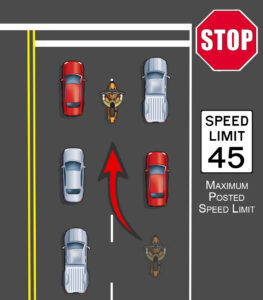
While operating a motorcycle (other than an autocycle), the operator may pass another vehicle stopped in the same direction of travel in the same lane when the following conditions exist:
- The individual is on a roadway, or an off-ramp, divided into two or more adjacent traffic lanes in the same direction of travel.
- The individual is on a roadway with a speed limit of 45 miles per hour or less, or on an off-ramp (lane filtering is not permitted on an on-ramp.)
- The vehicle being overtaken in the same lane is stopped.
- The motorcycle is traveling at a speed of 15 miles per hour or less.
- The movement may be made safely.
OFF-HIGHWAY VEHICLES
This section is included in the handbook for the many users of off-highway vehicles (OHV) in Utah. The following items are not all-inclusive or contain all pertinent information, but are provided only as a guide for those who might be interested. For more information regarding OHV rules, regulations, registration information, etc., please contact the Utah Parks and Recreation Division at 801.538.7433, or www.stateparks.utah.gov.
- Any person operating an OHV is subject to the provisions of the Utah traffic Rules and Regulations, unless specifically excluded.
- OHV operators and passengers under 18 years of age are required to wear properly fitted, safety-rated protective headgear with federally approved DOT standards. It is recommended that everyone riding an OHV wear a helmet.
- A person may not operate an OHV unless he/she possesses a valid driver license issued by the Driver License Division or the appropriate safety certificate issued by the Division of Parks and Recreation.
- The Division of Parks and Recreation issues safety certificates to individuals who successfully complete the OHV safety education and training program or pass the knowledge and skills test established.
- No person may operate or transport any OHV on any public land, trail, street, or highway unless the OHV has been registered for the current year.
- Out-of-state OHVs operated within the State of Utah are required to be registered in their home state. Any nonresident owning an OHV who operates or gives another person permission to operate the OHV on any public land, trail, street, or highway in this state shall:
- Apply for an off-highway vehicle decal issued exclusively for an OHV owned by a nonresident of the state;
- Pay an annual OHV user fee; and
- Provide evidence that the person is a non-resident, and that the person is the owner of the OHV.
NOTE: The above does not apply if the OHV is registered in a state that offers reciprocal operating privileges to Utah residents or if OHV is used in a competitive event.
- It is unlawful for an OHV to be operated along, across, or within the boundaries of an interstate freeway or controlled-access highway.
- An OHV may not be operated on any street or highway not designated as open to OHV use, except when crossing a street or highway; loading or unloading an OHV from a vehicle or trailer; or when an emergency.
- Snowmobiles may be operated on streets or highways which have been officially closed for the season to conventional motor vehicle traffic.
- No person shall operate an OHV upon privately owned land without permission from the owner or a person in charge. It is unlawful to alter, deface, or damage any fence, gate, or other enclosure.
- Registered OHV shall be equipped with:
- Brakes adequate to control the movement of and to stop and hold the vehicle;
- Headlights and taillights when the OHV is operated between sunset and sunrise;
- Noise control device; and
- Safety flag when operated on sand.
Street-Legal All-Terrain Vehicles
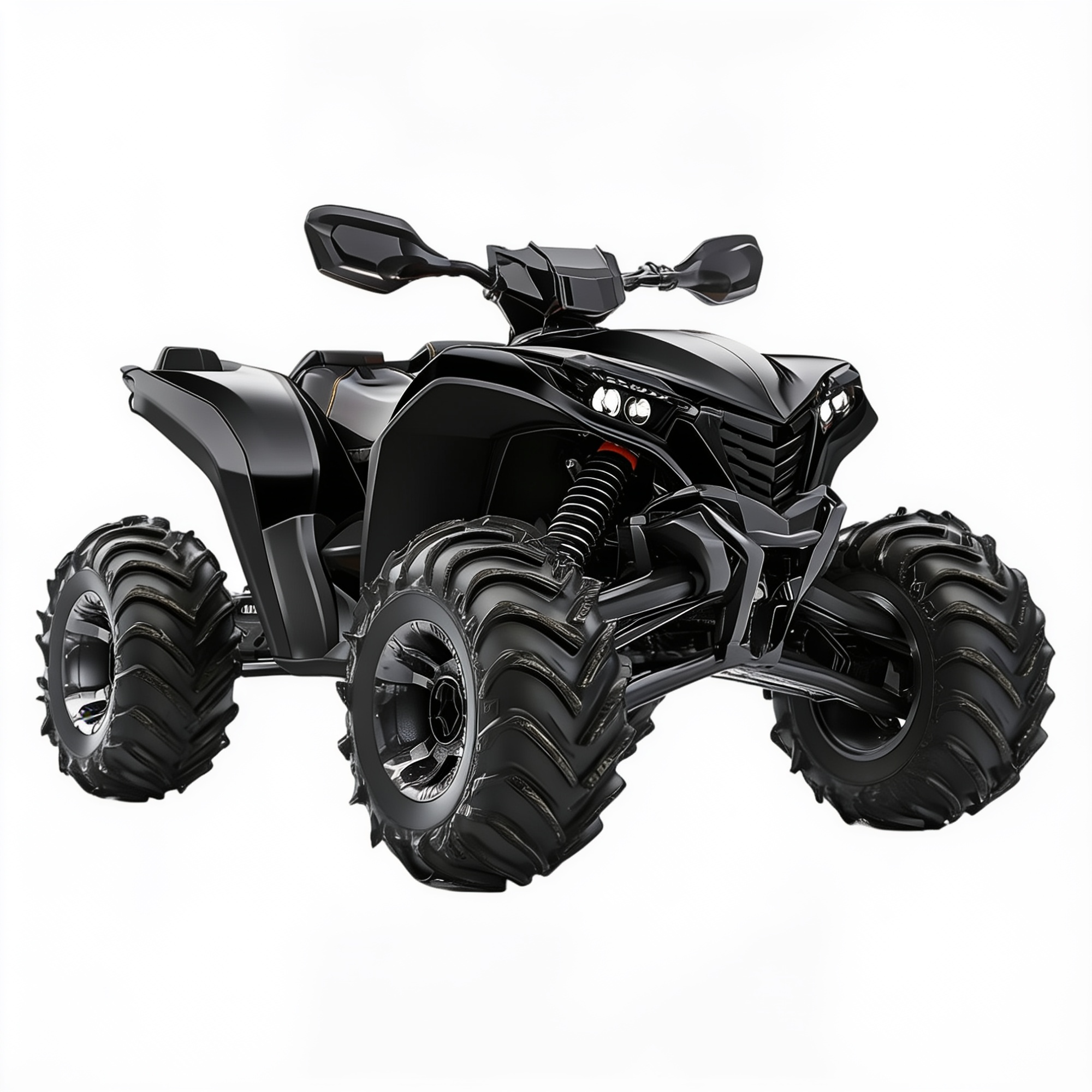
Type 1 ATV
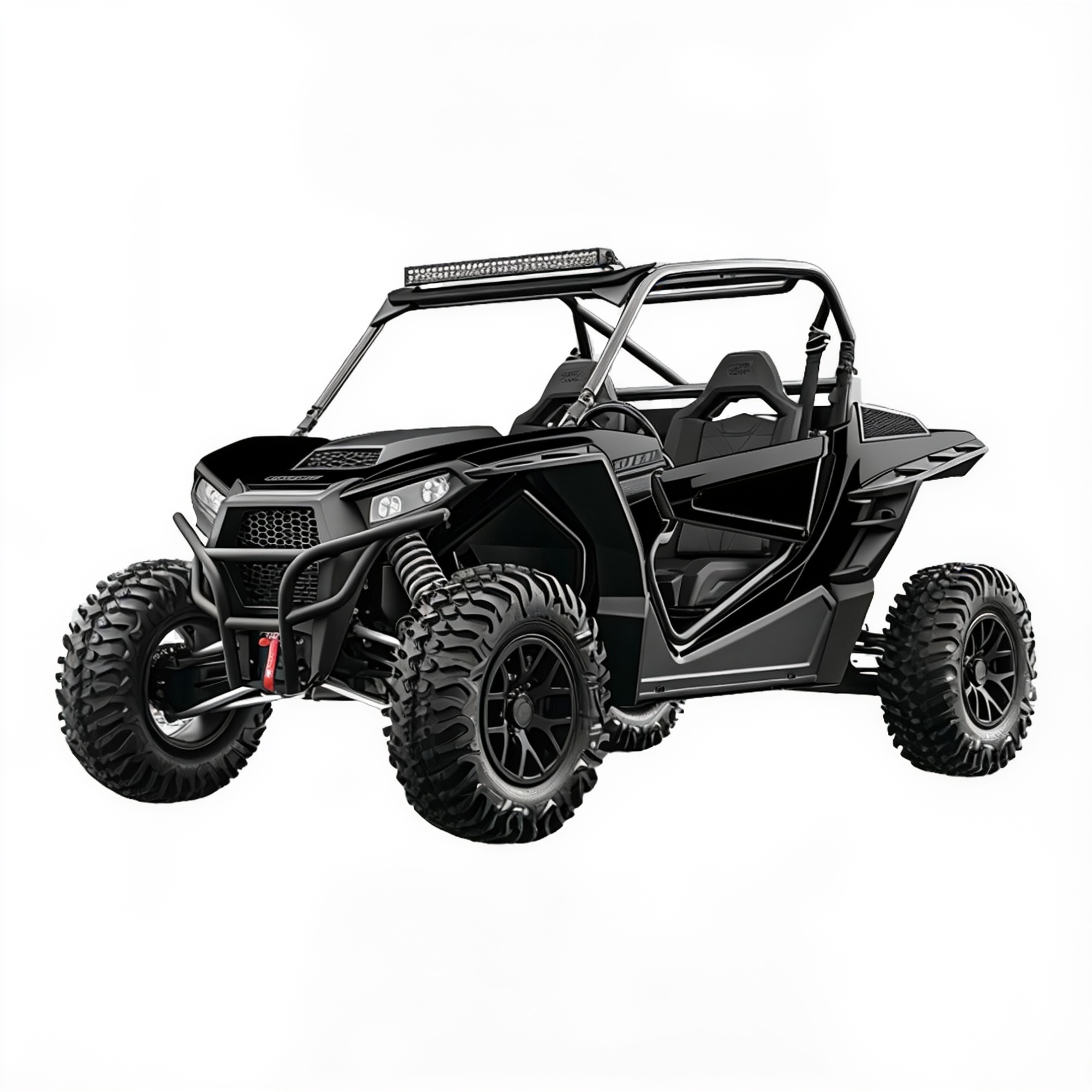
Type II ATV
An all-terrain type II vehicle means any motor vehicle 80 inches or less in width, traveling on four or more low-pressure tires, having a steering wheel, non-straddle seating, a rollover protection system, and designed for or capable of travel over unimproved terrain, and is:
- An electric-powered vehicle, or
- A vehicle powered by an internal combustion engine and has an unladen dry weight of 2,500 pounds or less.
INSURANCE
Street-legal ATV operators must carry proof of insurance. Failure to provide this evidence to a peace officer may lead to a driver license surrender, or result in the loss of vehicle registration.
REGISTRATION
A street-legal ATV is subject to a safety inspection the first time that a person registers an off-highway vehicle as a street-legal all-terrain vehicle. A street-legal ATV will also need to comply with county motor vehicle emissions inspections and maintenance programs.
LICENSING
A street-legal ATV shall comply with the same requirements as a motorcycle as to following traffic rules, registering, titling, odometer statement, vehicle identification, license plates, and registration fees.
HIGHWAY USE
ATVs that meet the requirements may be operated as street-legal ATVs on a street or highway that is a highway with one-lane in each direction.
- Street-legal ATVs on highways must not exceed 50 mph or the posted limit, whichever is lower.
- On roads with limits above 50 mph, operators must stay on the extreme right and use a reflector or reflective tape.
REQUIRED EQUIPMENT
A street-legal ATV shall be equipped with:
- One or more headlamps;
- One or more tail lamps;
- Either a tail lamp or a separate lamp to illuminate the rear license plate with a white light;
- One or more red reflectors on the rear;
- One or more stop lamps on the rear;
- Amber or red electric turn signals, one on each side, front and rear;
- A braking system, other than a parking brake;
- A horn or other warning device;
- A muffler and emission control system which complies with Utah requirements;
- Rearview mirrors on the left side of the driver;
- A windshield, unless the operator wears eye protection while operating the vehicle;
- A speedometer, illuminated for nighttime operation;
- For carrying passengers, a seat designed for passengers, a footrest, and handholds for each passenger;
- Seatbelts are required for each passenger in vehicles designed with side-by-side seating;
- Tires must not exceed 26 inches in height;
- Tires cannot be larger than those made available by the all-terrain vehicle manufacturer for the specific vehicle; and
- Tire tread must be at least 2/32 inches or greater.
OTHER TRANSPORTATION DEVICES FOR THE ROADWAY
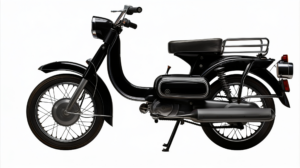
Moped
- Motorized bicycle, defined in Utah’s Traffic Code section 41-6a-102.
- Has pedals that permit human propulsion and a motor that produces not more than two brake horsepower.
- The motor cannot propel the cycle at a speed over 30 MPH on level ground.
- If an internal combustion engine is used, the displacement may not exceed 50 cubic centimeters.
- Must have a power drive system that functions directly or automatically without clutching or shifting by the rider after the drive system is engaged.
- Cannot operate on sidewalks or public roads with four or more lanes designated for regular traffic.
- Should ride close to the right side of the roadway.
- A moped does not include a motor-assisted scooter, electric-assisted bicycle, or an E-mobility device.
A driver license is required; however, a motorcycle endorsement is not required to drive a moped.
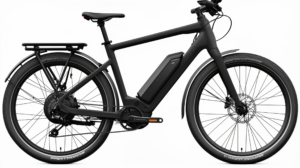
Electric-Assisted Bicycle
- Motorized bicycle, defined in Utah’s Traffic Code section 41-6a-102.
- Has a power output of not more than 750 watts.
- Has fully operable pedals.
- Has permanently affixed cranks that were installed at the time of the original manufacture.
- Is fully operable as a bicycle without the use of an electric motor.
- Is listed as one of the following:
- Class 1 - Equipped with a motor or electronics that provides assistance only when the rider is pedaling and ceases to provide assistance when the bicycle reaches the speed of 20 MPH.
- Class 2 - Equipped with a motor or electronics that may be used exclusively to propel the bicycle and is not capable of providing assistance when the bicycle reaches the speed of 20 miles per hour.
- Class 3 - Equipped with a motor or electronics that provides assistance only when the rider is pedaling and ceases to provide assistance when the bicycle reaches the speed of 28 miles per hour. This class is equipped with a speedometer.
- Age restrictions:
- An individual under eight years old may not operate an electric-assisted bicycle on any public property, highway, path, or sidewalk.
- An individual under 14 years old may not operate an electric-assisted bicycle on any public property, highway, path, or sidewalk unless under the direct supervision of the individual's parent or guardian.
- An individual under 16 years old may not operate a Class 3 electric-assisted bicycle.
A driver license or motorcycle endorsement is not required to operate an electric-assisted bicycle.
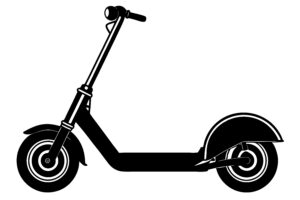
Motor-Assisted Scooter
This is a self-propelled device with:
- At least two wheels in contact with the ground.
- A braking system capable of stopping the scooter under typical operating conditions.
- An electric motor not exceeding 2000 watts.
- Handlebars and a deck designed for a person to stand, or a deck and a seat for a person to sit, straddle, or stand while operating the device.
- Must have the ability to be propelled by human power alone.
A person under eight years of age may not operate a motor-assisted scooter with the motor running on any public property, highway, path, or sidewalk.
Safety operation:
- A person may operate a motor-assisted scooter on a roadway and in a crosswalk.
- A person may not operate the motor-assisted scooter in an unsafe manner.
No person may operate a motor-assisted scooter:
- Faster than 20 MPH.
- In a public parking structure.
- On public property, if posted as an area prohibiting bicycles.
- While carrying more people at one time than the number for which it is designed.
- Has been structurally or mechanically altered from the original manufacturer's design.
NOTE: Local authorities may pass ordinances regulating the use of motor-assisted scooters on public properties, sidewalks, and roadways. Always check with your city officials for current ordinances before you ride. For more information, please refer to Traffic Code 41-6a-1115.
A driver license or motorcycle endorsement is not required to operate a motor-assisted scooter.
Electric Personal Assistive Device
This device is a self-balancing device with:
- Two non-tandem wheels on the ground.
- A system capable of steering and stopping under typical operating conditions.
- An electric propulsion system with an average power of one horsepower or 750 watts.
- A maximum speed capacity on a paved, level surface of 12.5 MPH.
- A deck designed for a person to stand while operating the device.
- This does not include a wheelchair.
A person operating an electric personal assistive mobility device:
- Must be at least 15 years old.
- Must follow the same laws as operating a bicycle.
- May be operated on a path, trail, or highway designed for the use of a bicycle.
- At night if the device is equipped with or the operator is wearing a front light that emits a white light visible of at least 300 feet in front of the device and front, rear, and side reflectors.
- On a sidewalk if the operation does not exceed a reasonable speed, and is safe for weather conditions and pedestrians.
- Shall yield to a pedestrian or other person using a mobility aid.
A person may not operate an electric personal assistive mobility device:
- Under age 15 unless directly supervised by a parent or guardian.
- On a highway with four or more traffic lanes except when operating in a lane designated for bicycle traffic.
- On a highway with a posted speed limit over 35 MPH, except when operating in a bicycle lane.
- A person may not park on a highway or sidewalk in a manner that obstructs vehicular or pedestrian traffic.
- Endanger the safety of people or property.
- An owner may not authorize or permit a person to operate an electric assistive mobility device in violation of the law.
A driver license or motorcycle endorsement is not required to operate an electric personal assistive mobility device.
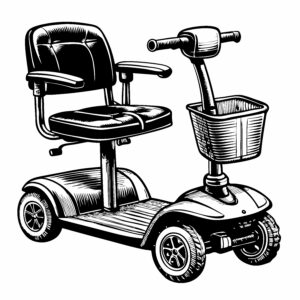
Mini-Motorcycle / Pocket Bike
Mini-motorcycle means a motorcycle that has a seat or saddle less than 24 inches from the ground as measured on a level surface with properly inflated tires.
A person may not operate a mini-motorcycle on any public property, highway, path, or sidewalk unless the mini-motorcycle is registered for highway use and the operator is licensed to operate a motorcycle.
NOTE: Many cities in Utah have passed ordinances not allowing mini-motorcycles to be driven on the city streets. Check with your city for more information.
A driver license and motorcycle endorsement are required to drive a mini-motorcycle/pocket bike.

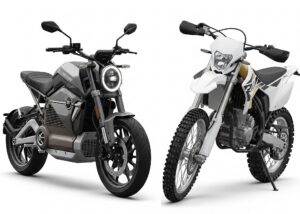
Electric Motorcycle
This is an electric-driven device:
- Powered by an electric motor of more than 750 watts.
- Capable of exceeding a speed of 20 MPH using the power of the electric motor alone.
To ride on public roads, the device must be:
- Street-legal (lights, mirrors, etc.)
- Registered with the Utah Division of Motor Vehicles.
- Insured.
Law enforcement is actively enforcing these laws, with authority to cite and impound unregistered, high-powered electric bikes operating on public roads, sidewalks, or paths.
An individual may not operate a high-power electric device on a freeway.
This includes surrons and modified or tampered electric-assisted bicycles. Surrons as well as modified or tampered electric-assisted bicycles require motorcycle registration, insurance, and a driver license for legal street operation, or OHV registration for legal off-road use.
A driver license and motorcycle endorsement are required to operate an electric motorcycle / high-powered electric device.
Autocycle
An autocycle means a motor vehicle that is designed to travel with three or fewer wheels in contact with the ground, is equipped with a steering wheel, and has seating that does not require the operator to straddle or sit astride the vehicle.
A driver license is required; however, a motorcycle endorsement is not required to drive an autocycle.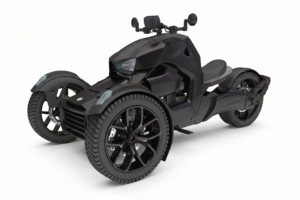
UTAH RIDER TRAINING PROGRAM
Learn to Ride - Ride to Live
Motorcycling is not only fun and exciting; it is also a practical way to get around. There is no thrill quite like riding a motorcycle. To get the most enjoyment out of riding and do it safely, you need special skills and strategies to know you are in control. Don’t learn through trial and error - that’s the hard way!
Two rider training courses are offered through the Department of Public Safety to help you reduce and/or manage risks and to help make your riding more enjoyable. The Utah Motorcycle Rider Training Program, which is part of the Driver License Division of the Department of Public Safety, administers the statewide rider education program. The courses are conducted at approximately 24 sites throughout the state. These courses, developed by the Motorcycle Safety Foundation, will enhance your street-survival skills, whatever your age or experience.
BASIC RIDER COURSE (BRC)
This is a 15-hour basic course (10 hours of actual riding), which teaches physical and mental skills and the responsible attitude necessary for safe, enjoyable riding. In the classroom, you’ll learn how to create a strategy for riding in traffic and how to deal with critical situations. On the off-street, protected range, you will learn in building-block order the proper methods for gear shifting, turning and stopping, as well as emergency braking, swerving, and proper cornering techniques. Motorcycles and helmets are furnished for this course. No previous riding experience is required.
Benefits
The obvious and most important benefit you will have from this course is that you will learn how to operate your motorcycle safely. In addition, many insurance companies offer reduced premiums to BRC graduates, and if you apply for a motorcycle endorsement on your Utah driver license within six months after completing the BRC, the Driver License Division may waive the skill (road) portion of your motorcycle endorsement tests. Some motorcycle distributors/dealers and brand-sponsored clubs will reimburse part or all of the tuition.
NOTE: Starting July 1, 2009, if you are 15 years and six (6) months of age or older and hold a valid learner permit or driver license for any classification or are eligible for a motorcycle learner permit, you may enroll in and complete an approved rider training course.
BASIC RIDER COURSE 2 (BRC2)
This five-hour course is designed specifically for the experienced rider and has something for you, whether you have been riding for one year or for many years. Some of the things you will learn are how to manage risks, control rear-wheel skids, detect and avoid hazards, and manage traction. The range portion of the course will provide you with an opportunity to safely reach new limits under the expert guidance of an experienced instructor. You will ride your own motorcycle, so you will also be able to safely explore the limits of your motorcycle.
Benefits
In addition to honing your riding skills and fine-tuning the mental skills you need for survival in traffic, you will have a GREAT time! There are also many insurance companies which offer reduced premiums to graduates of the BRC2. If you apply for a motorcycle endorsement on your Utah driver license within six months after completing the BRC2, the Driver License Division may waive the skill (road) portion of your motorcycle endorsement tests if you were tested at the end of the BRC2 by a certified motorcycle education instructor, and received a Motorcycle Safety Foundation (MSF) BRC2 License Waiver RiderCourse card.
NOTE: If you take the Basic Rider Course (BRC) or the Basic Rider Course 2 (BRC2) and you are planning on riding a motorcycle greater than 650 cc you will either need to pass the riding skills test with the school or with the Driver License Division using a 650 cc or larger motorcycle.
If you have any questions about the state rider training program or the classes, please call 801.964.4493 or visit http://dld.utah.gov.
TEST YOUR KNOWLEDGE
- Utah law requires two rearview mirrors on every motorcycle.
True or False - If the motorcycle you test on is 249 cc or less, you will be restricted to riding motorcycles 249 cc or less.
True or False - Every motorized vehicle driven/ridden on public roads or highways needs to be insured, registered and licensed/endorsed.
True or False - If you are younger than _____ years of age, you are required to wear a DOT-approved helmet.
- 17
- 18
- 21
- A Beginning Rider Course is required for all riders.
True or False
Test answers: (1) False; (2) True; (3) True; (4) 3; (5) False